What to See at the Sagrada Família: Façades, Nave, Glass, Museum
Gaudí wrote a whole Bible in stone and filled a forest with coloured light.
Book this visit
Some links are affiliate links: if you book, we may earn a commission at no extra cost to you. How this works
 Entry ticket included
N° 1
Sagrada Família guided tour in six languages
Both façades and the interior with an official guide, in six languages. Regular groups are 20–30 people; a small-group option caps it at 10.
- 1.5 hrs
- Free cancellation
Live guide: English, Spanish, French, German, Italian, Portuguese
From · per person
Nov 2026
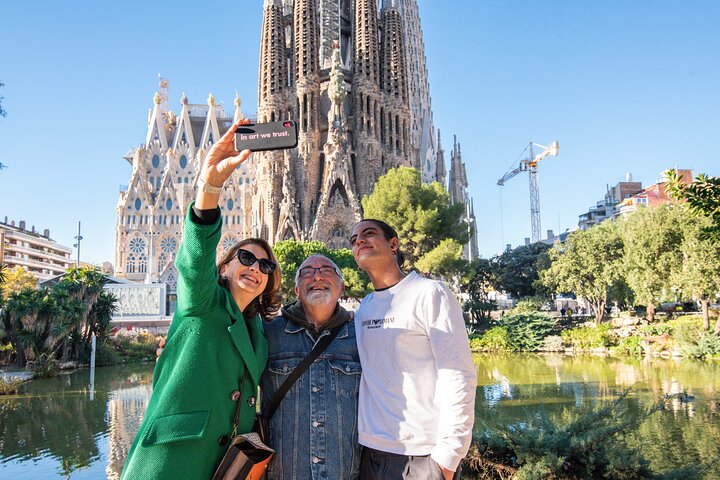 Entry ticket included
N° 2
Sagrada Família small-group guided tour with ticket
The longest of the standard tours, 1 hour 45, in groups of up to 12 with a radio headset. English only.
- 1.75 hrs
- Small group
- Free cancellation
Live guide: English
From · per person
Nov 2026
 Our pick Entry ticket included
N° 3
Sagrada Família guided tour in groups of up to 9
Interior and exterior with a local guide, in groups of up to 9.
- 1.5 hrs
- Small group
- Free cancellation
Live guide: English, Spanish, French, German, Italian
From · per person
Nov 2026
Sorted by price, lowest first. Prices from the booking platform; the price at checkout is the one that counts.
At the Sagrada Família you will see two finished façades that tell the birth and death of Jesus, a nave of tree-like columns lit by coloured glass, the altar canopy, and a museum about Gaudí and the building. Allow about 1 hour for the basilica and museum, about 1 hour 30 with a tower.
In short
- Outside: the Nativity façade (Gaudí’s own) and the Passion façade (Subirachs).
- Inside: the forest of columns, the stained glass, the altar, the evangelists on the columns.
- Below: the museum, with plaster models, drawings and a view into the crypt.
- Optional: one tower, Nativity or Passion.
1. The Nativity façade
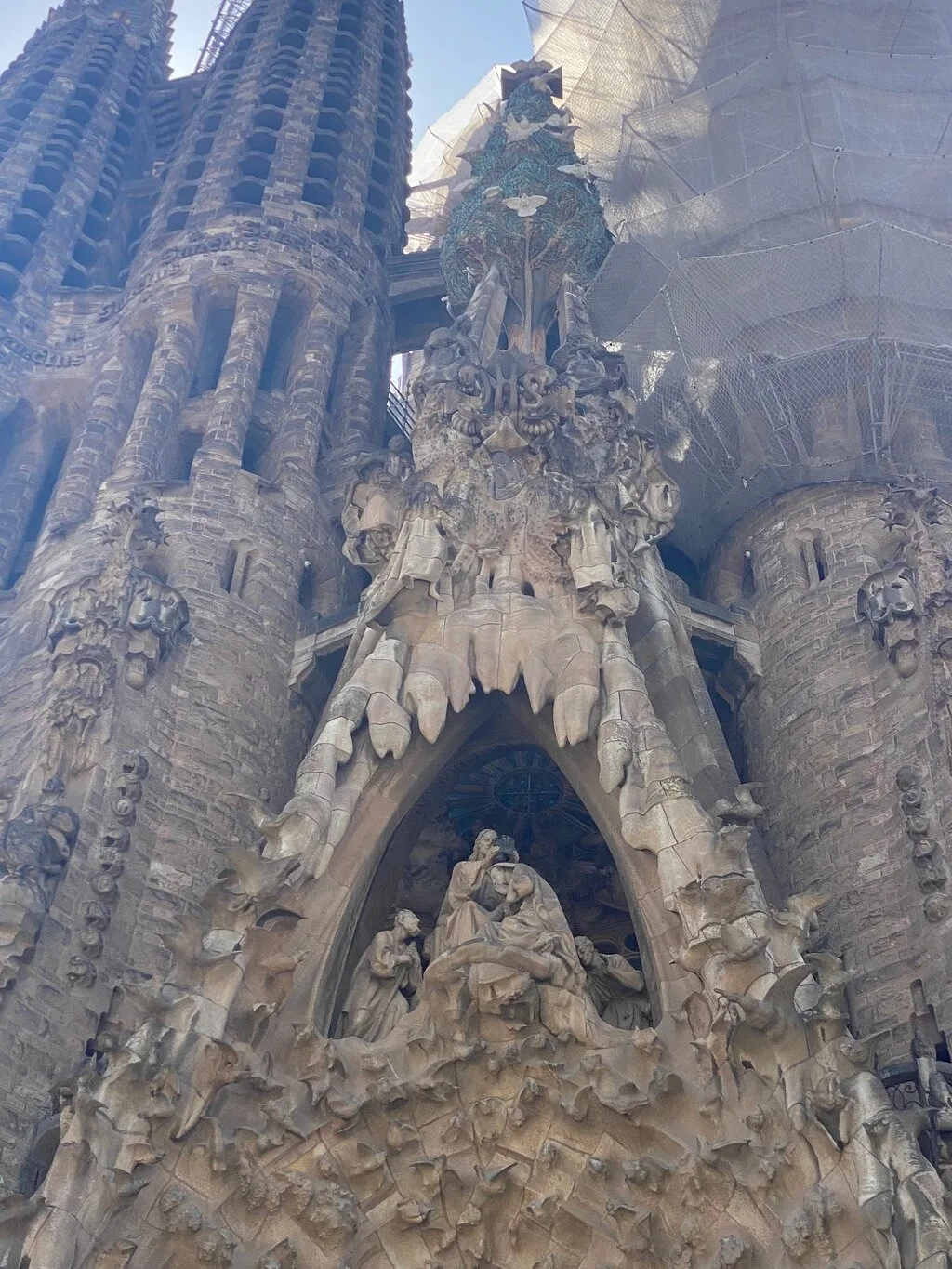
The general entrance is through the façade Gaudí saw built, facing east towards the sunrise and the birth of Christ. The stone seems to melt into life: angels, shepherds, the Holy Family, turtles carrying columns, birds and plants. Three portals are dedicated to Hope, Charity and Faith, and above the central one a green stone cypress, the Tree of Life, is covered in white doves.
Look up at the four bell towers: their tops are covered in trencadís, Gaudí’s mosaic of broken coloured ceramic. The Nativity façade and the crypt are the parts UNESCO listed in 2005.
2. The nave, a forest of stone
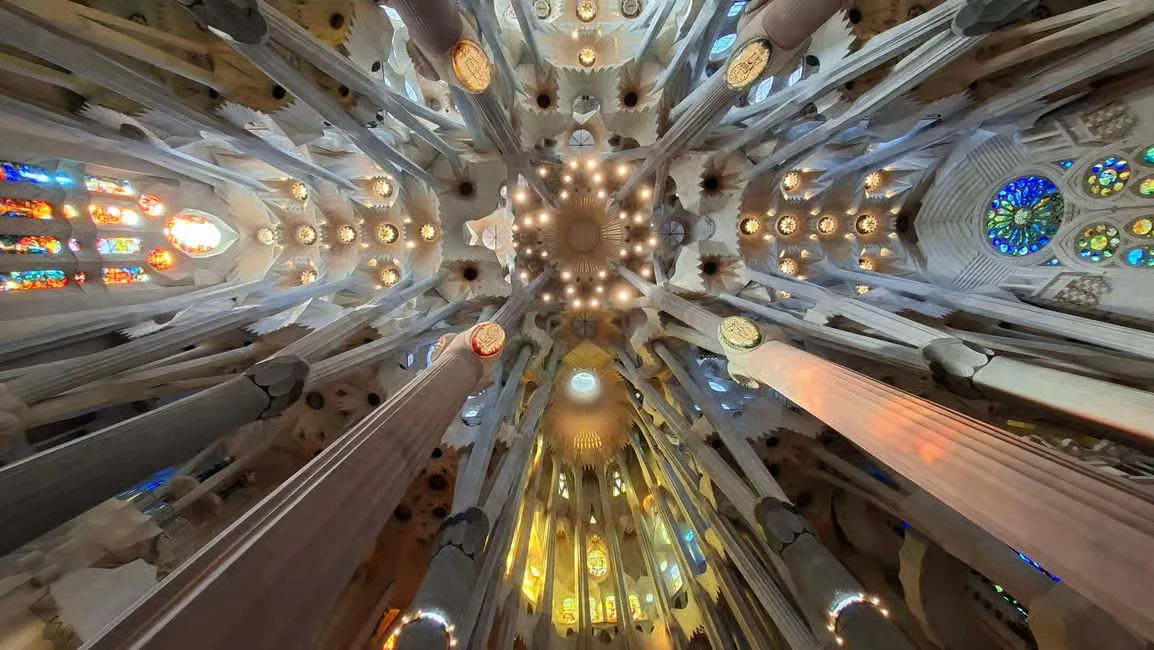
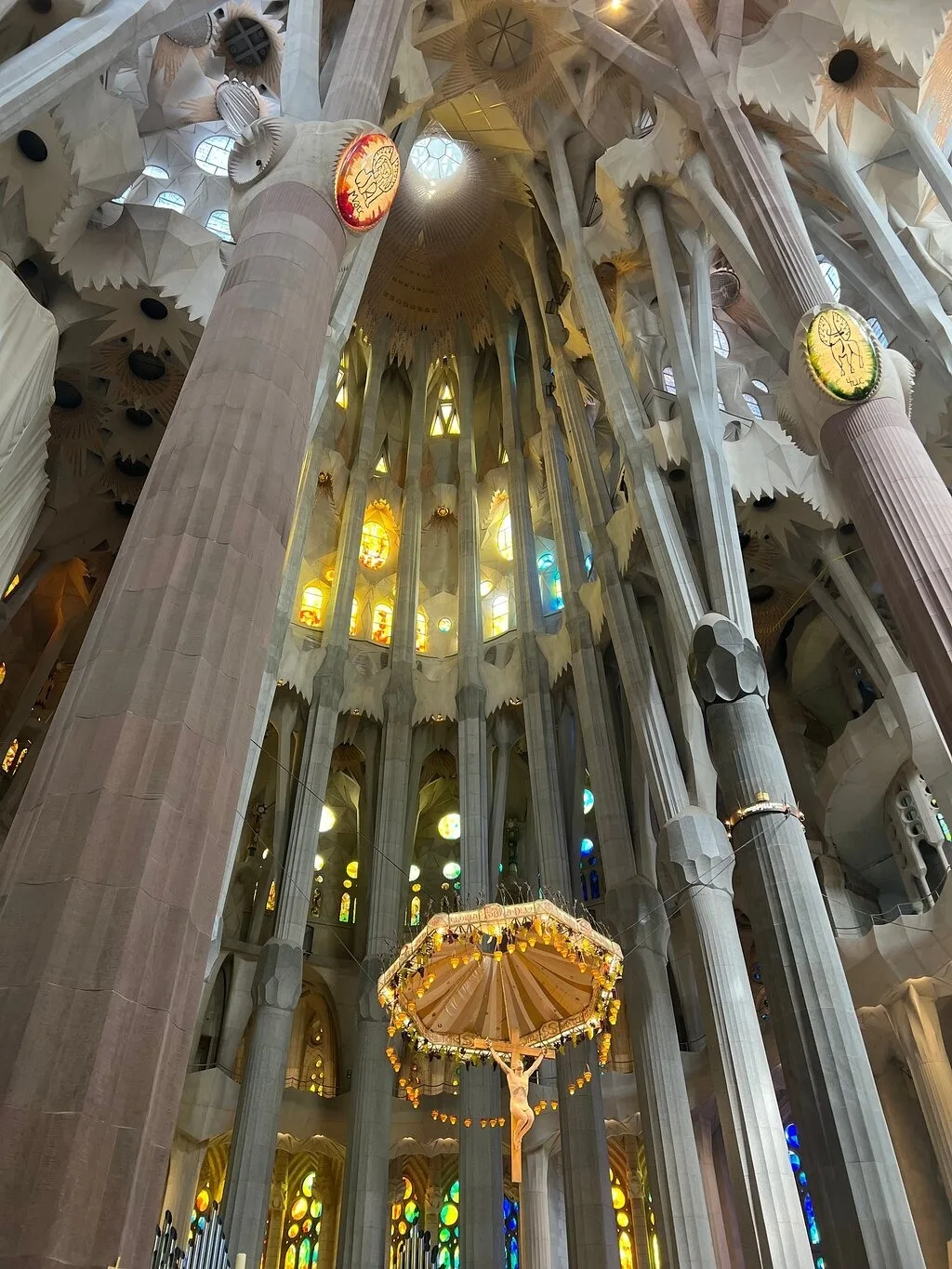
Inside, Gaudí replaced the flying buttresses of Gothic cathedrals with leaning columns that branch like trees. They rise to a vault 45 m high in the central nave, where the “branches” open into leaf-like knots and the ceiling becomes a canopy of light. The columns are not all the same: the thickest, in dark porphyry, carry the most weight, and each has a different number of sides that turns into a circle as it rises (the double-twist column Gaudí invented).
The structure in detail: architecture explained.
3. The stained glass
The windows are the reason to pick your hour carefully. cool blues and greens on the east (Nativity) side, lit by the morning sun; warm yellows, oranges and reds on the west (Passion) side, lit in the afternoon. The artist was Joan Vila-Grau, commissioned in 1999 to follow Gaudí’s guidelines; the work took nearly 20 years. Higher up, the glass becomes clearer to let more light in. See the best time to visit to time your slot.
4. The evangelists on the columns
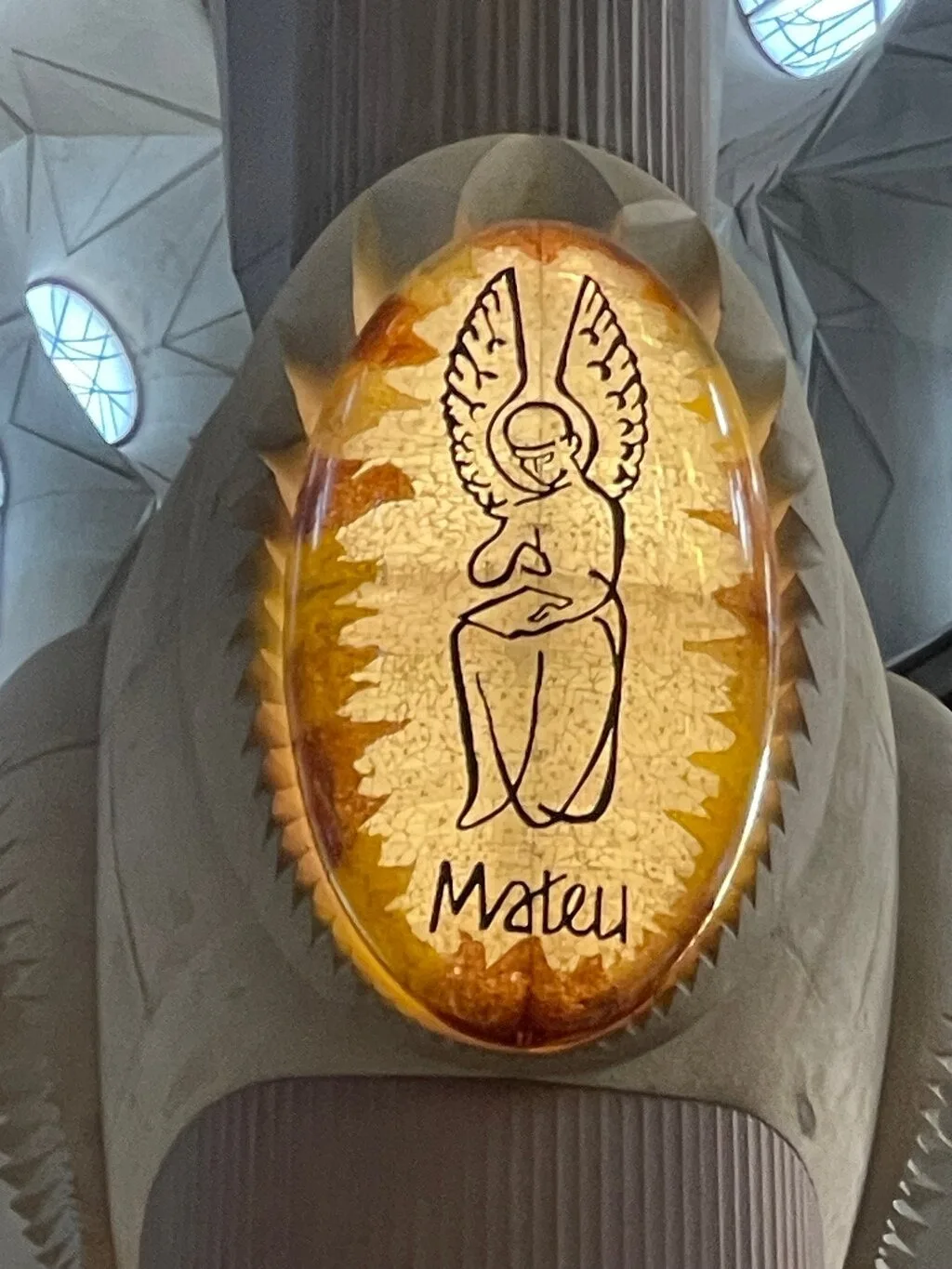
On the four big columns around the crossing, look for glowing oval medallions with the symbols of the evangelists: the winged man for Matthew (Mateu in Catalan), the lion for Mark, the ox for Luke and the eagle for John. Their towers rise directly above them.
5. The altar and its canopy
Above the main altar hangs a crucified Christ under a seven-sided canopy hung with lamps and bunches of grapes and wheat, symbols of the Eucharist. Behind it, the apse and the organ.
6. The Passion façade
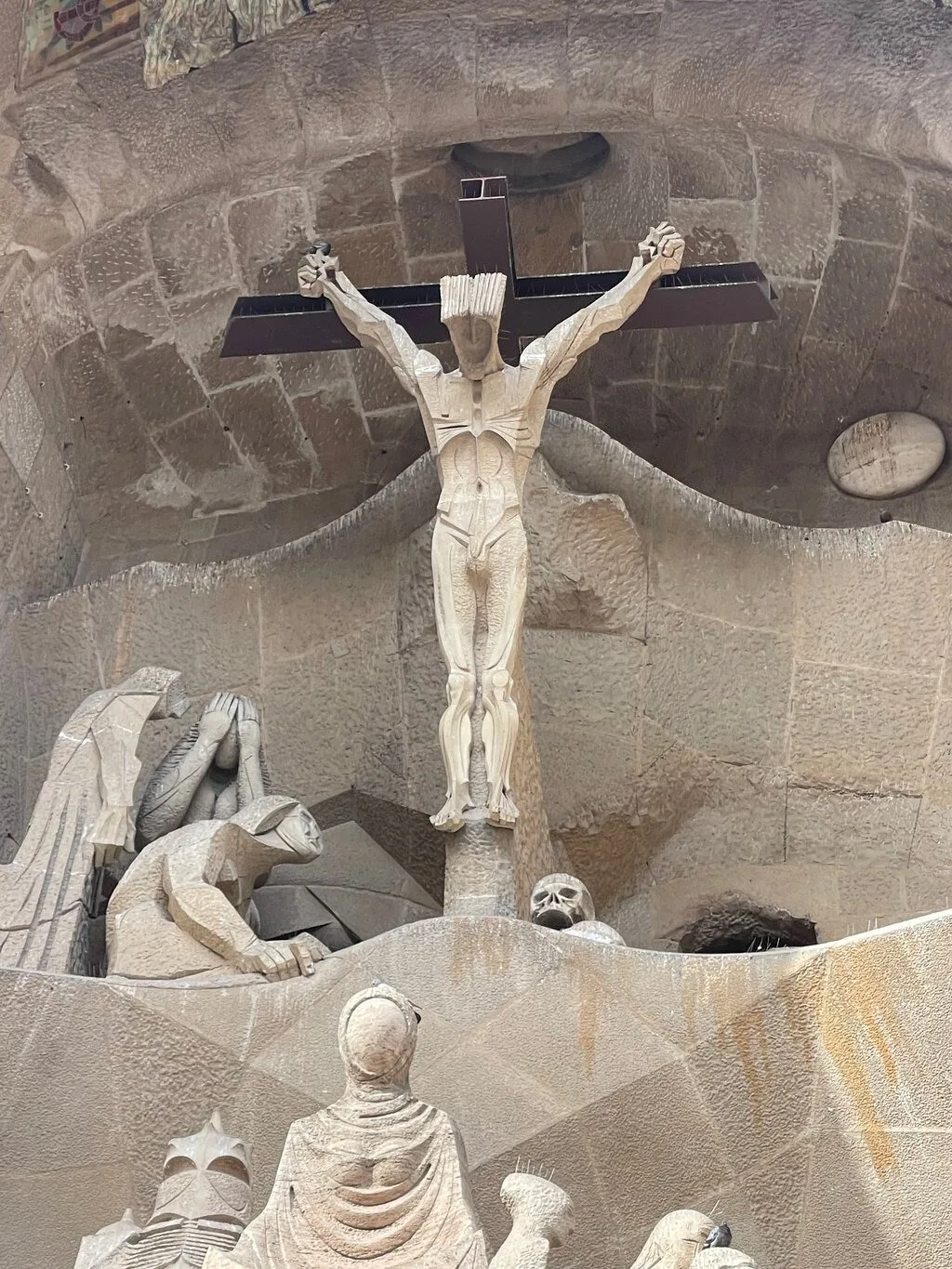
Leave by the west side to see the Passion façade, the opposite of the Nativity: bare, angular and dramatic. Its bone-like leaning columns hold up a porch, and the sculptures by Josep Maria Subirachs tell the last days of Jesus, from the Last Supper to the burial, in an S-shaped path you read from bottom left to top right. Look for the magic square where every line adds up to 33, Jesus’s age at his death.
7. The museum
Under the church, the museum tells the story of the construction: Gaudí’s plaster models (pieced back together after the 1936 fire), drawings, photographs, and the hanging chain model used to work out the shape of arches by gravity (the one on show was made for Gaudí’s Colònia Güell crypt). A window looks down into the crypt, where Gaudí is buried. It is included in every ticket and is easy to miss: follow the signs as you leave the nave.
8. Optional: a tower
A tower ticket adds a lift ride up one tower and a walk down. Our comparison: Nativity or Passion tower.
What you can’t visit
- The Glory façade, the future main entrance on Carrer de Mallorca, is still under construction.
- The crypt is used as a parish church and is not part of the tourist visit; the basic ticket excludes it.
Next: history and Gaudí · map and plan · photo gallery
Questions people ask
What is inside the Sagrada Família?
A nave of tree-like columns branching towards the vault, stained glass that floods the space with colour, an altar under a hanging canopy, and a museum below the church about its construction.
What do the Sagrada Família façades show?
The Nativity façade (east) shows the birth and childhood of Jesus, carved in Gaudí’s lifetime. The Passion façade (west) shows his last days in bare, angular sculpture by Josep Maria Subirachs. The Glory façade (south) is still being built.
Is the Sagrada Família museum included in the ticket?
Yes. Every official ticket includes the museum below the basilica, with Gaudí’s models and drawings.