Sagrada Família Façades Explained: Symbols to Look For
Gaudí wanted the façades to teach the Gospel to anyone who stood in front of them.
Book this visit
Some links are affiliate links: if you book, we may earn a commission at no extra cost to you. How this works
 Entry ticket included
N° 1
Sagrada Família express guided tour with ticket
A 75-minute tour in your own language with an accredited guide, then free time inside the basilica. Groups of up to 15.
- 1.25 hrs
- Small group
- Free cancellation
Live guide: English, Spanish, French, German, Italian
From · per person
Nov 2026
 Our pick Entry ticket included
N° 2
Sagrada Família guided tour in groups of up to 9
A guide reads the façades with you, which is where the stories are.
- 1.5 hrs
- Small group
- Free cancellation
Live guide: English, Spanish, French, German, Italian
From · per person
Nov 2026
Sorted by price, lowest first. Prices from the booking platform; the price at checkout is the one that counts.
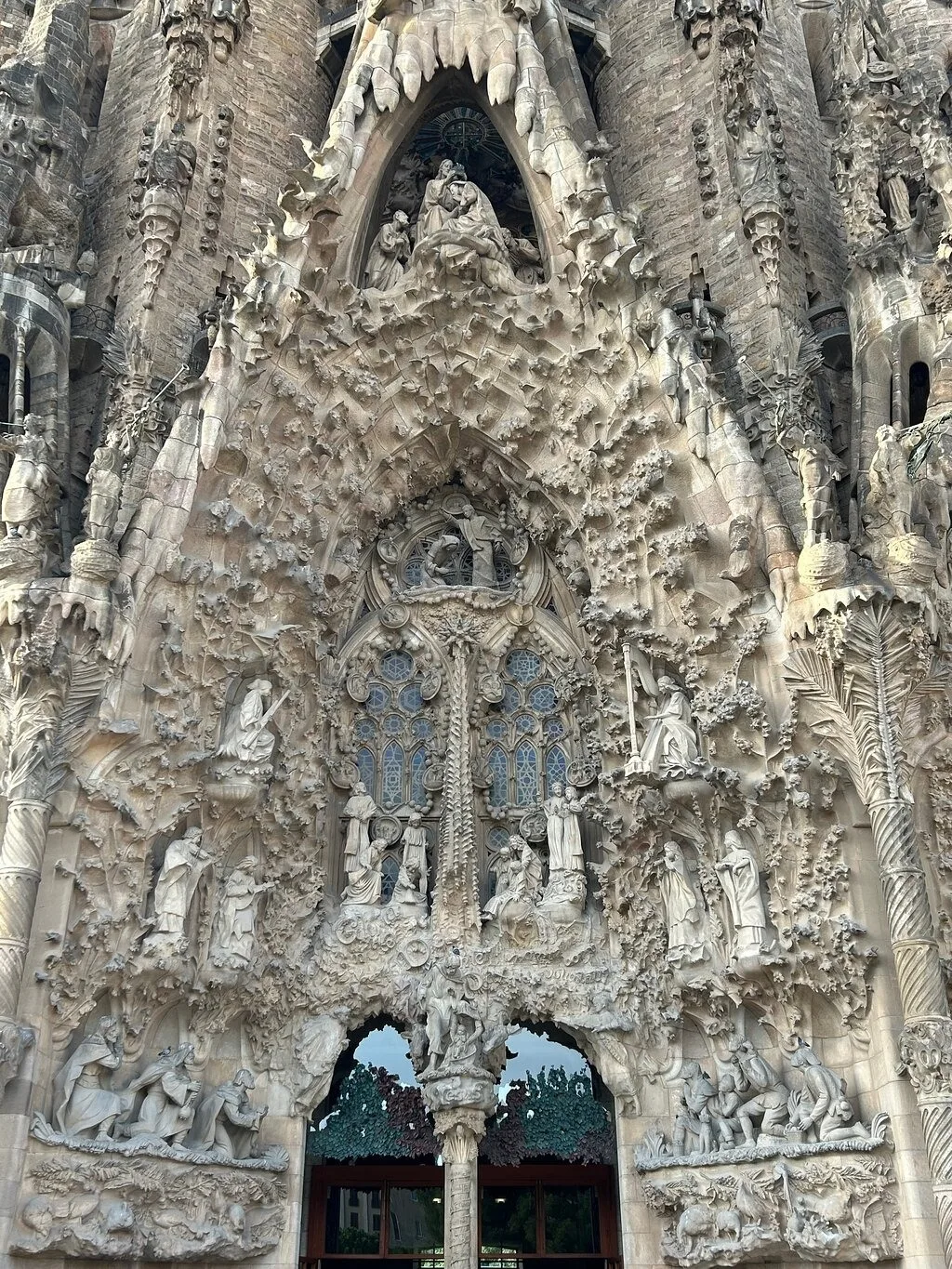
The Sagrada Família has three façades, each telling one part of Christ’s life: the Nativity (east, birth), the Passion (west, death) and the Glory (south, resurrection, still under construction). three: Nativity (east), Passion (west) and Glory (south, the future main entrance, still being built). Gaudí designed them as a Bible in stone, to be read from the street.
In short
- Nativity: Gaudí’s own façade, full of life, with portals of Hope, Charity and Faith.
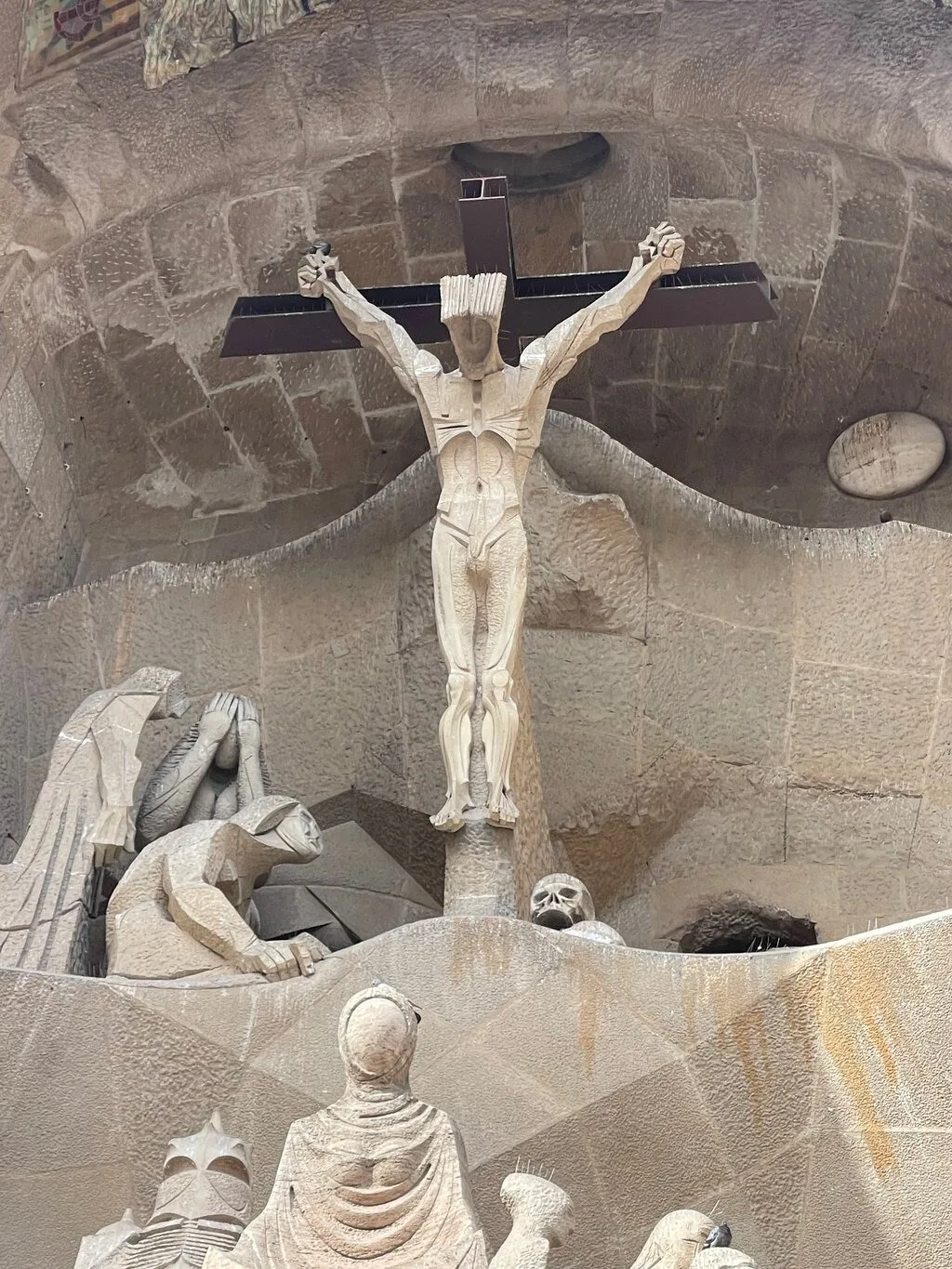
- Passion: bare and angular, by Josep Maria Subirachs, read in an S from bottom left to top right.
- Look for the Tree of Life, the turtles, the magic square of 33 and a carved Gaudí.
- Each façade will carry four bell towers, one for each of twelve apostles.
The Nativity façade: birth and life
The only façade Gaudí saw built faces the sunrise. It is crowded on purpose: life bursting out of stone, with plants, birds and animals between the scenes.
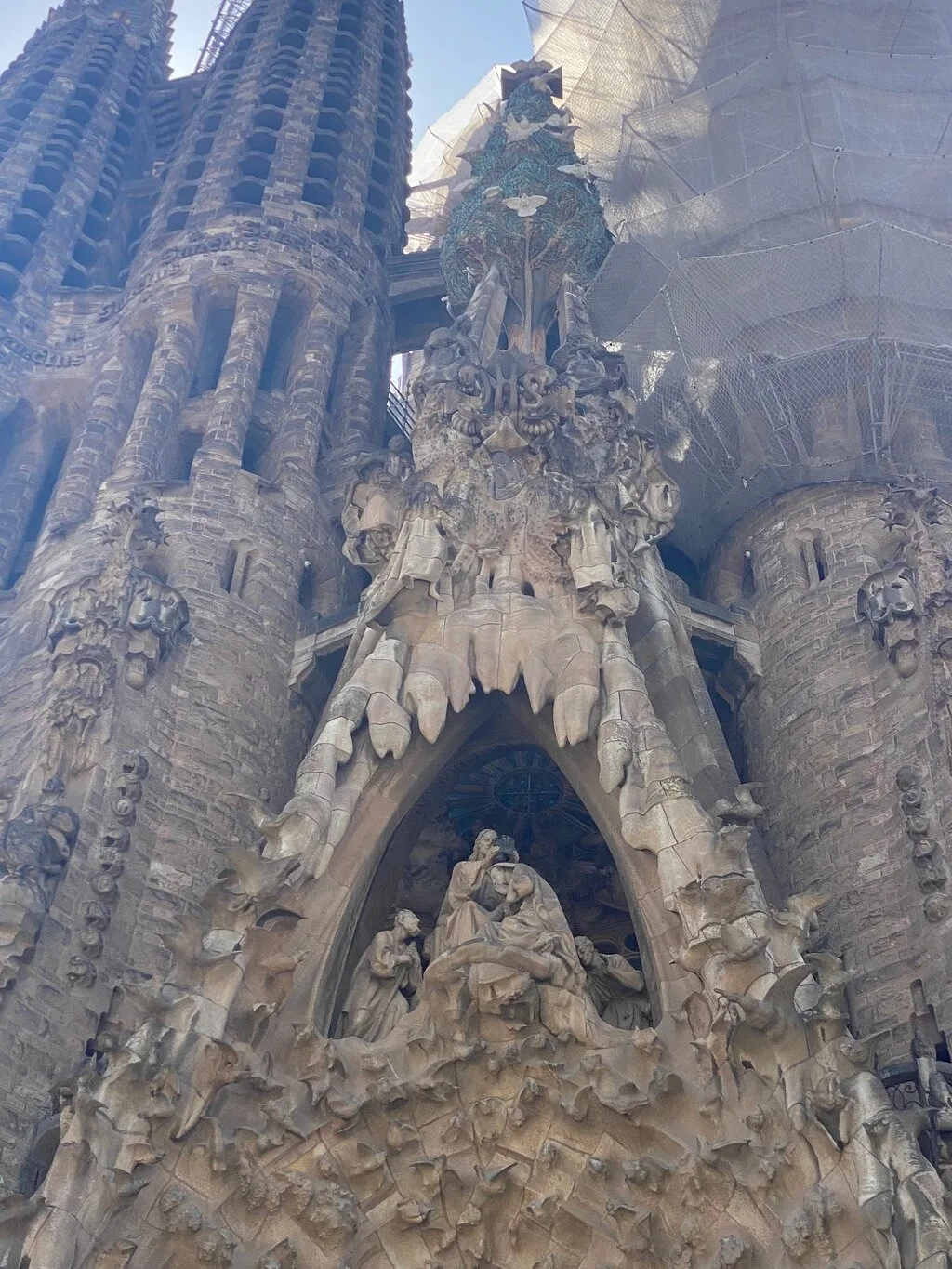
Three portals, three virtues:
| Portal | Virtue | What to look for |
|---|---|---|
| Left | Hope | The flight into Egypt and the massacre of the innocents; geese and water plants of the Nile |
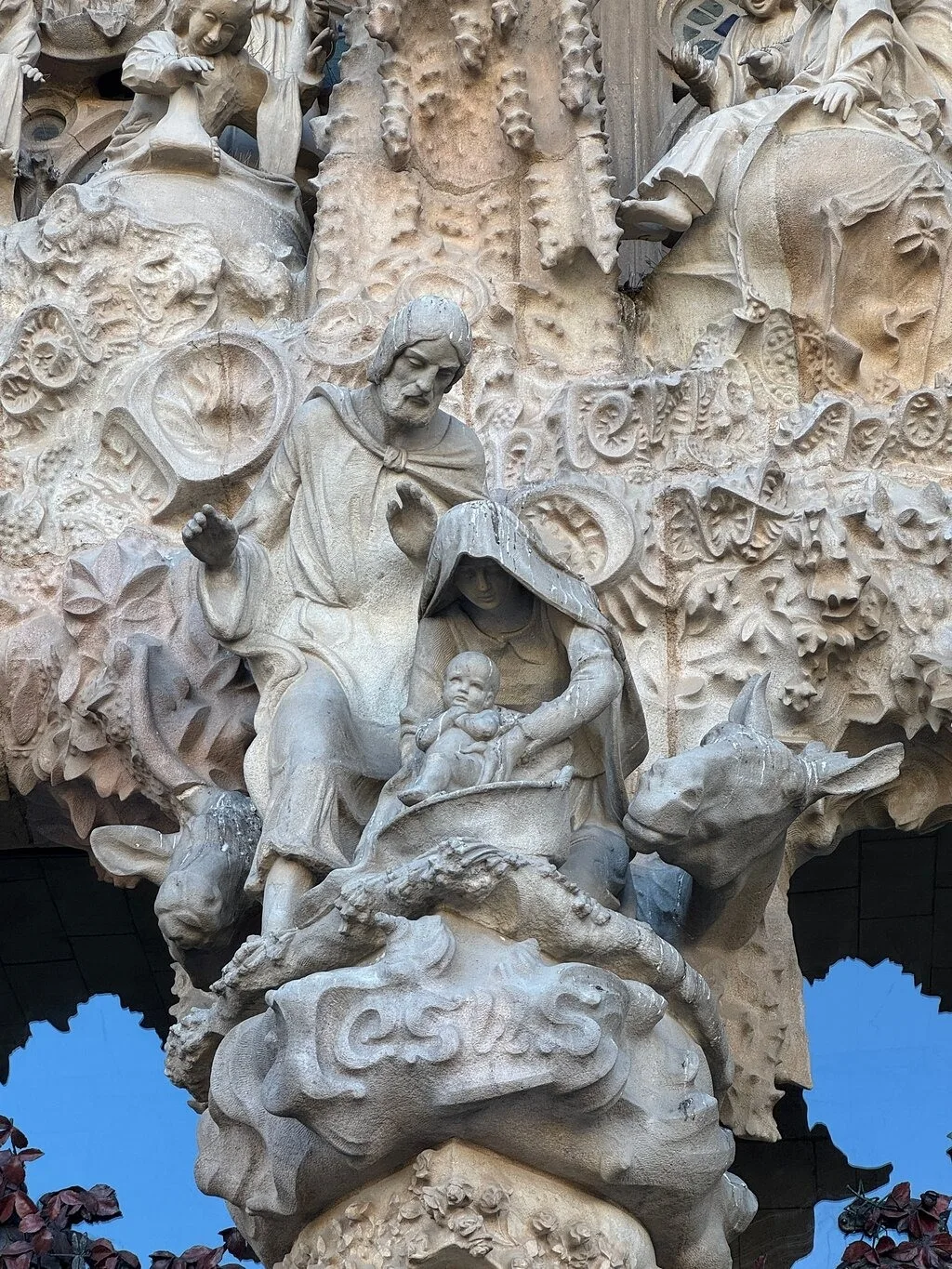
| Centre | Charity | The birth of Jesus with Mary and Joseph, the shepherds and the Magi, angels playing music, the star of Bethlehem |
| Right | Faith | Jesus in the temple at twelve, Jesus working as a carpenter, the Visitation |
Details worth finding:
- The Tree of Life. Above the central portal, a green cypress, an evergreen that stands for eternal life, covered in white doves.
- The turtles. Two columns rest on turtles: a land tortoise on the mountain side, a sea turtle on the sea side.
- Chameleons on the corners, the opposite of the turtles: change against permanence.
- The constellations. Above the Nativity, the signs of the zodiac as they stood on the night Jesus was born.
- The bell towers. Their tops end in bishops’ symbols covered in trencadís, coloured broken ceramic.
The Passion façade: suffering and death
The west façade, facing the sunset, is the opposite of the Nativity: bare, hard and silent. Gaudí drew it in 1917 and said it should frighten. The sculptor Josep Maria Subirachs carved it from 1987 in his own angular style, which shocked many at the time.
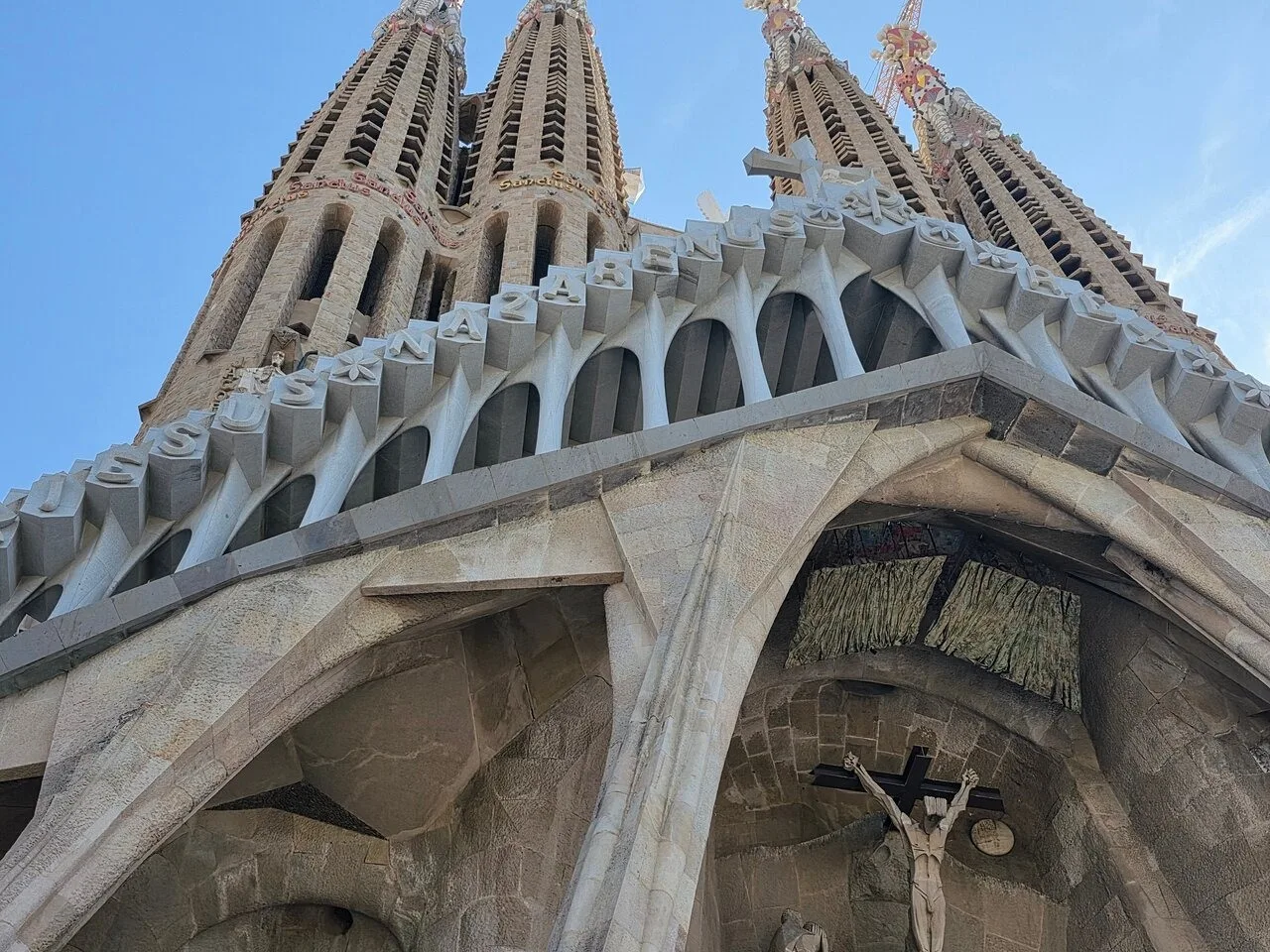
Read it like a comic strip in an S, from the bottom left to the top right:
- The Last Supper, bottom left.
- The kiss of Judas, with the magic square beside it: every line adds up to 33, Jesus’s age at his death.
- Peter’s denial, with the cock that crowed.
- Ecce Homo and Pilate, in the centre.
- Veronica’s veil. Her face is blank; the face of Christ appears on the cloth. Just to the left, a figure taking notes is a portrait of Gaudí himself.
- The soldiers, whose helmets echo the chimneys of Gaudí’s Casa Milà.
- The Crucifixion, at the top centre, and the burial, top right.
The Glory façade: still to come
The largest façade, on Carrer de Mallorca, will be the main entrance. It will show the path of humanity towards glory, with the Creed written on it. You can see only the start of it today: it is the side with the cranes.
Inside: the evangelists and the columns
The symbolism carries on indoors. The four main columns carry the symbols of the evangelists, and the columns are named after the apostles and the dioceses of the world. See what to see inside.
See it with someone who reads it
The audio guide covers the façades well, but a live guide can point at each figure. These tours include the entry ticket and spend time on both façades.
Next: what to see · history and Gaudí · photo tips
Questions people ask
What do the Sagrada Família façades represent?
Three moments of Christ’s life: the Nativity façade (east) shows his birth and childhood, the Passion façade (west) his suffering and death, and the Glory façade (south, still being built) his resurrection and glory.
What is the magic square on the Sagrada Família?
A 4×4 grid of numbers on the Passion façade, next to the kiss of Judas, in which every row, column and diagonal adds up to 33, the age of Jesus at his death.
Why are there turtles on the Sagrada Família?
Two turtles carry the columns of the Nativity façade: a land tortoise on the side facing the mountains and a sea turtle on the side facing the sea, symbols of stability and of the unchanging.