Skip to content
Sagrada Família Mistakes to avoid
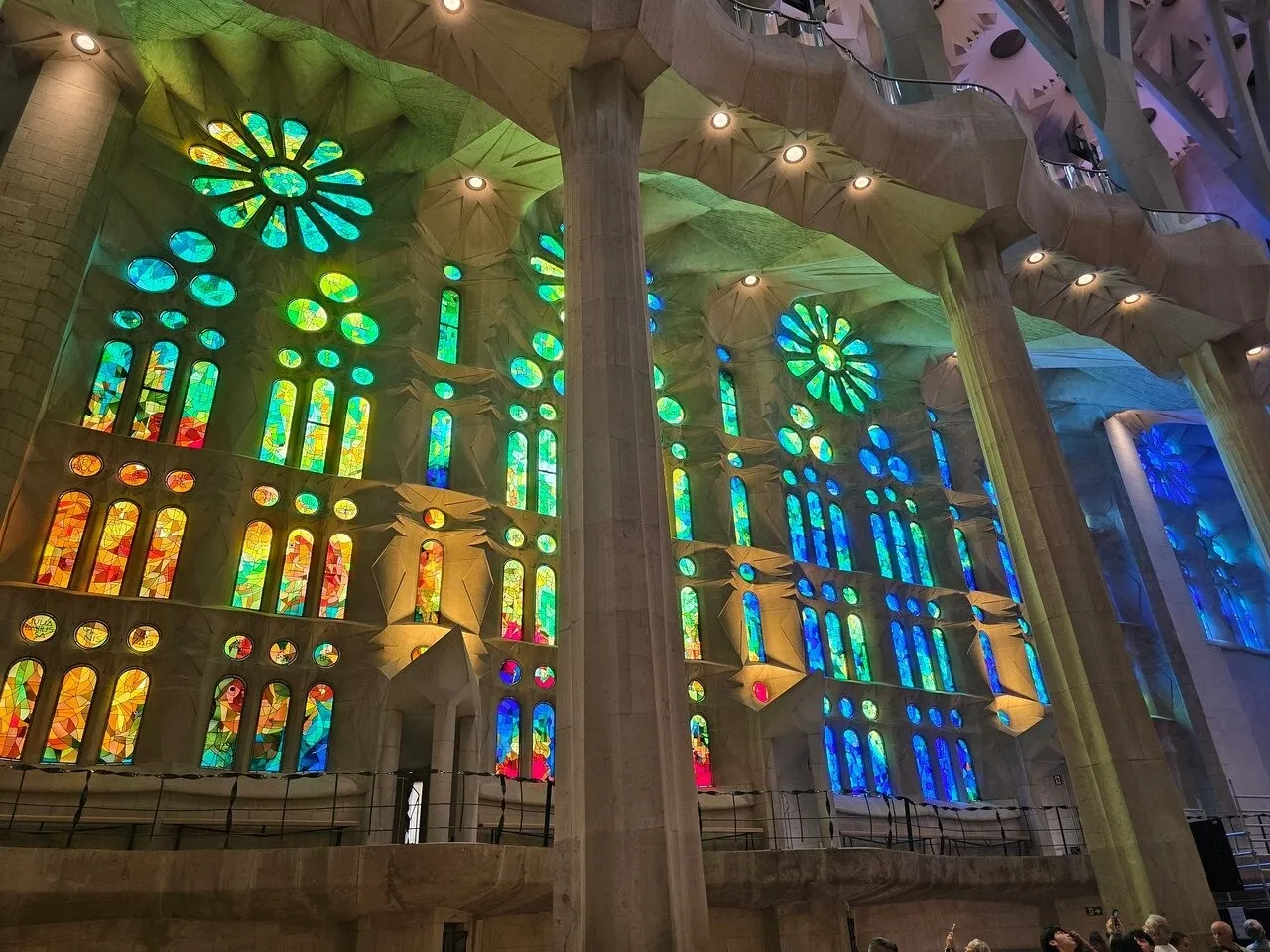
The nave of the Sagrada Família filled with blue, green, yellow and red light from the stained glass windows

Get your Sagrada Família tickets

When are you visiting?

Four things to know before you go

The visit itself is easy. These four points decide whether it goes smoothly. Each links to the full answer.

  1. 01

    Book online, ahead

    There is no ticket desk. Timed tickets go on sale about two months ahead and carry your name: bring ID.

    How tickets work
  2. 02

    Choose basic, tower or guide

    Basic €26 with audio guide, €36 with a tower, €30 with a guide. Under 11s go free.

    All prices and discounts
  3. 03

    Dress for a church

    Shorts and skirts to mid-thigh, no swimwear, nothing see-through. Small bag only: there are no lockers for luggage.

    Dress code and rules
  4. 04

    Go for the light

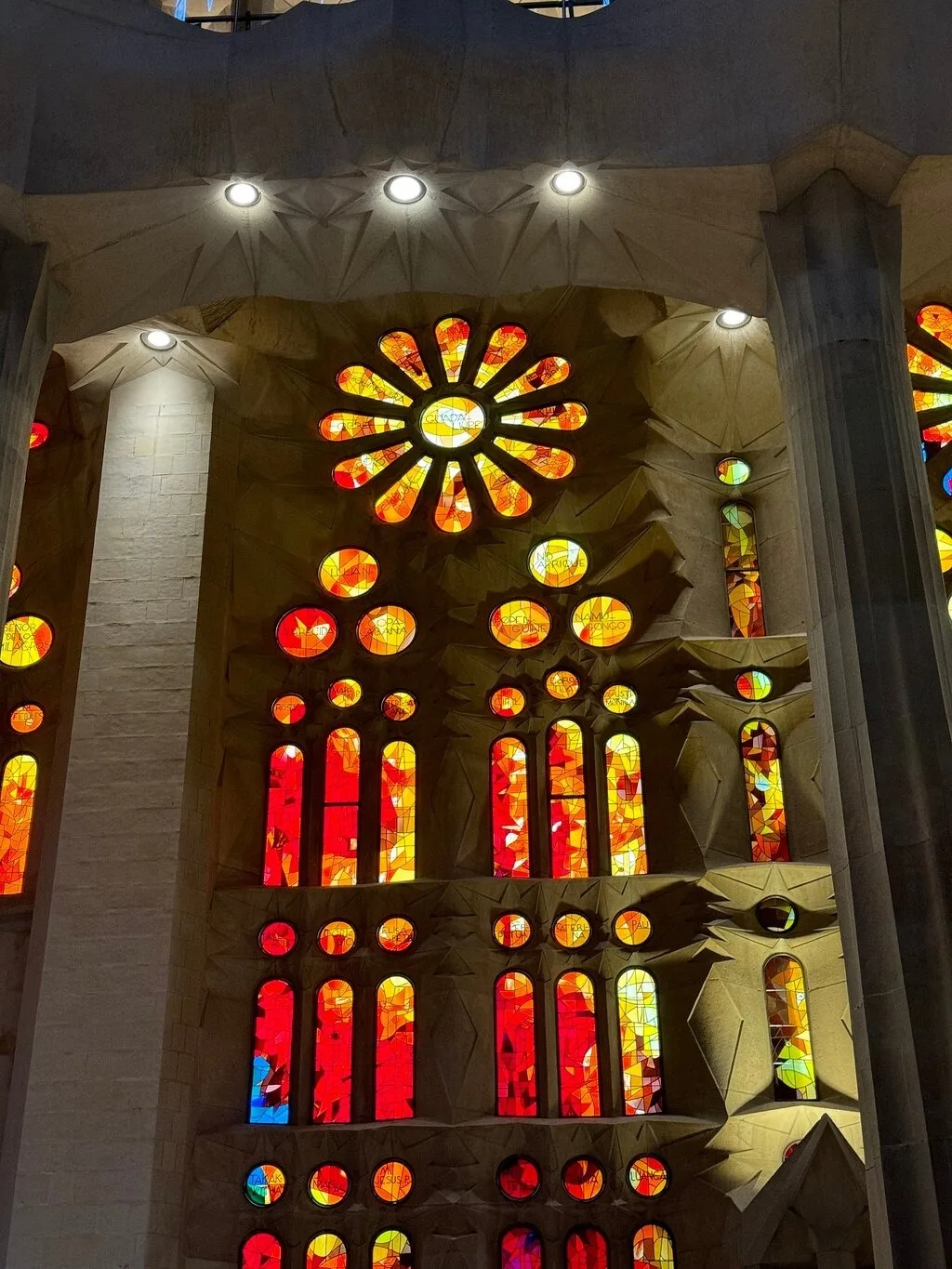
    Sunny afternoons set the west windows on fire. Arrive 15 minutes early: late arrivals are not let in.

    Best time to visit

The colour clock

Pick your hour by the light

The windows by Joan Vila-Grau are cool on the east side and warm on the west. Drag the sun to see what your time slot looks like.

Our tip: a sunny afternoon slot, about two hours before closing. For a quiet nave instead, take the first slot of the day.

Best time to visit
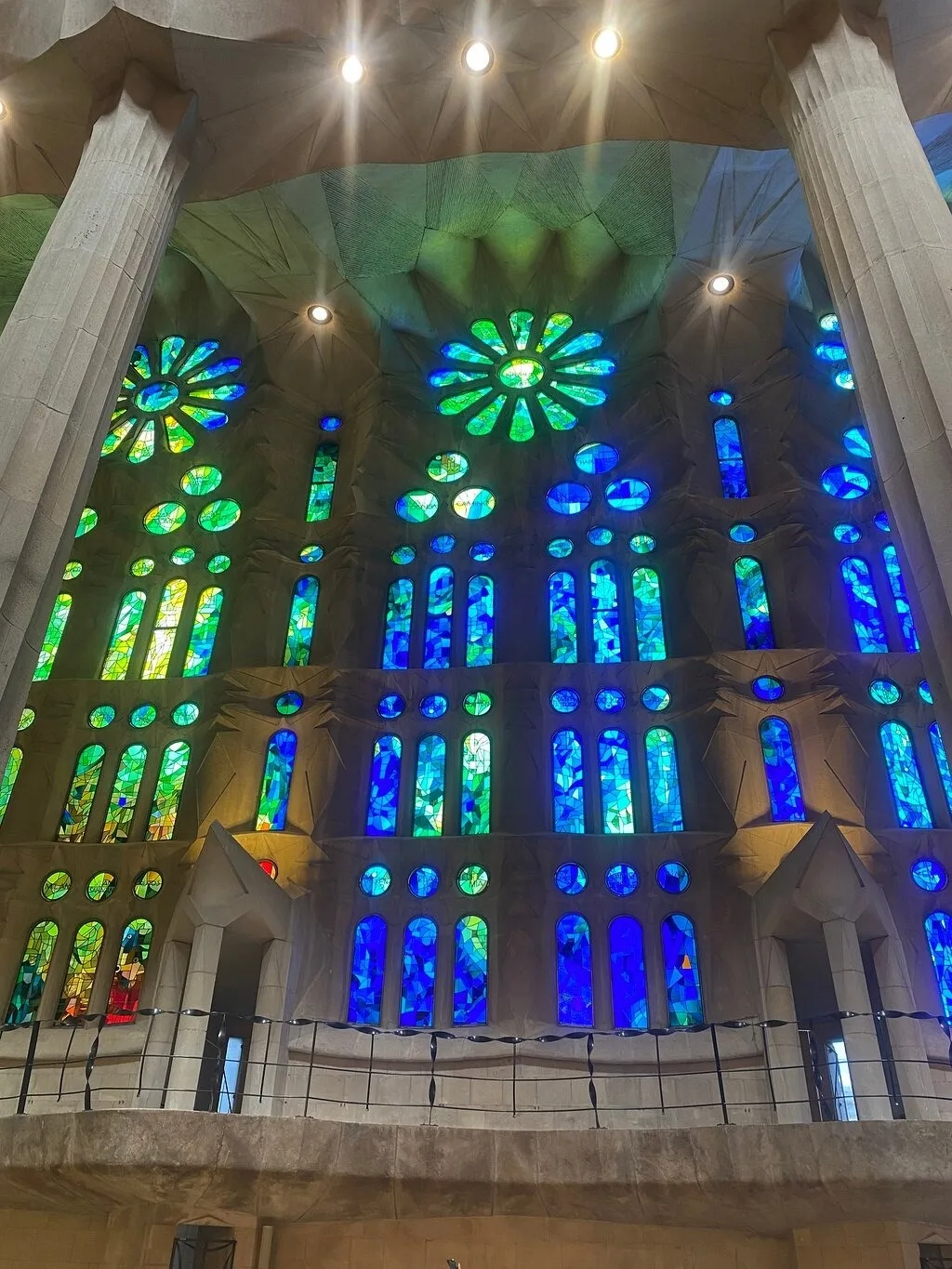
Blue and green stained glass windows on the east side of the Sagrada Família nave
Red and orange stained glass windows on the west side of the Sagrada Família nave
East · Nativity 9:00

Morning: the sun rises behind the Nativity façade and lights the east windows in blues and greens.

Inside and out

What you’ll see

Two façades that tell the beginning and the end of Christ’s life, and between them a nave Gaudí designed as a forest of stone, lit by coloured glass.

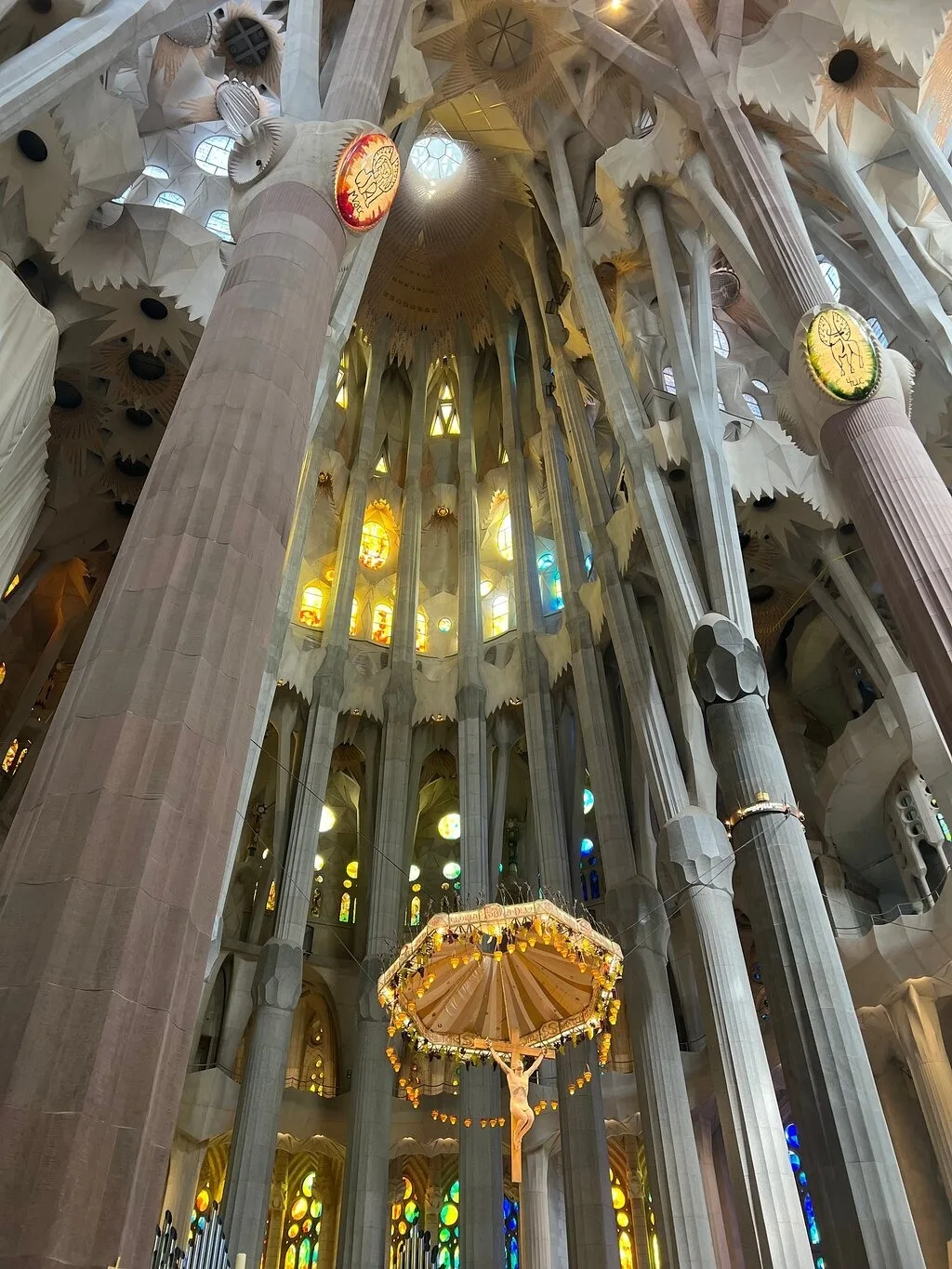
Columns branch like trees towards a ceiling of leaves and light.
01 The nave, a forest of stone Columns branch like trees towards a ceiling of leaves and light.
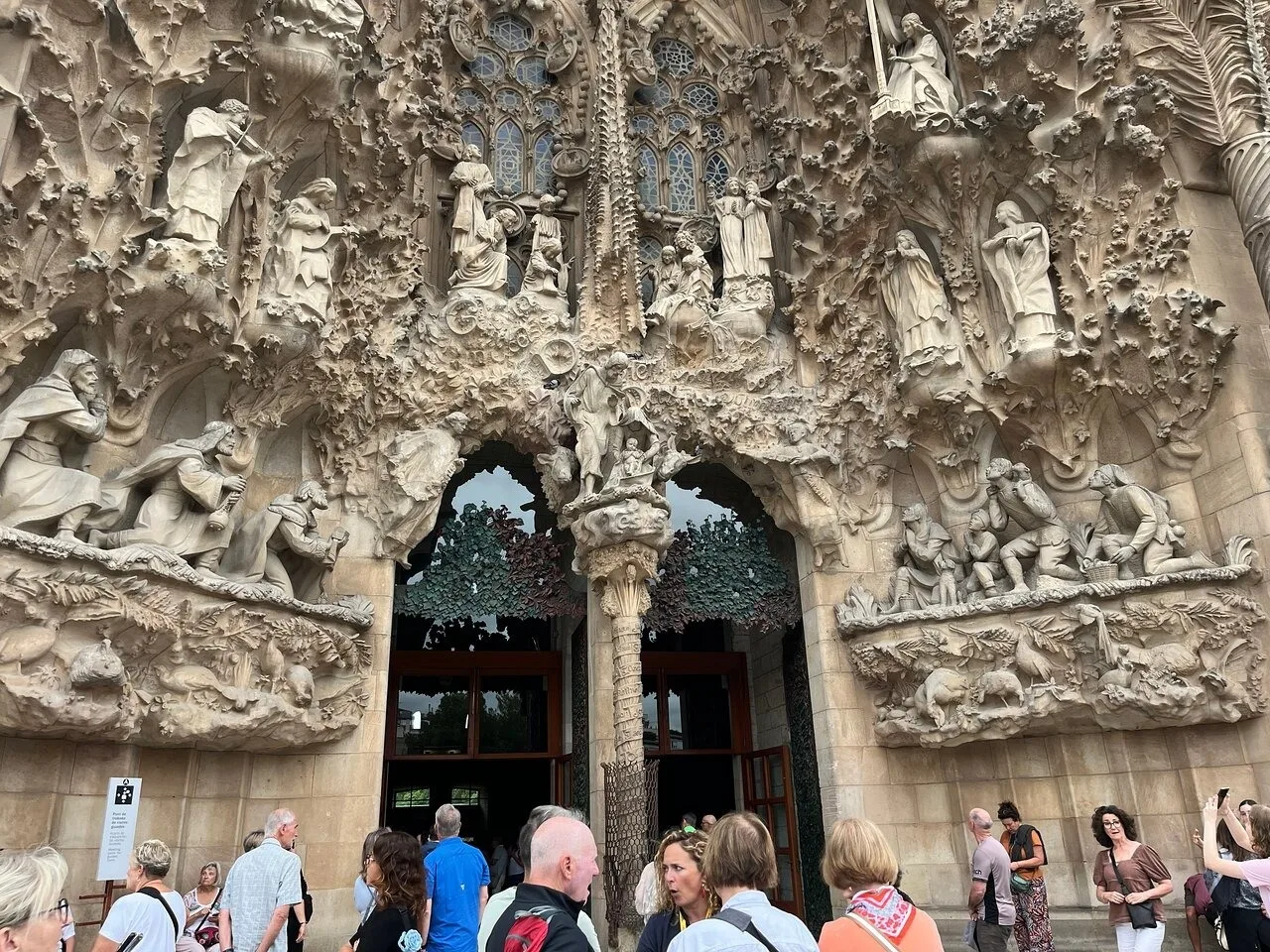
The façade Gaudí saw built: the birth of Jesus, carved in stone crowded with life.
02 The Nativity façade The façade Gaudí saw built: the birth of Jesus, carved in stone crowded with life.
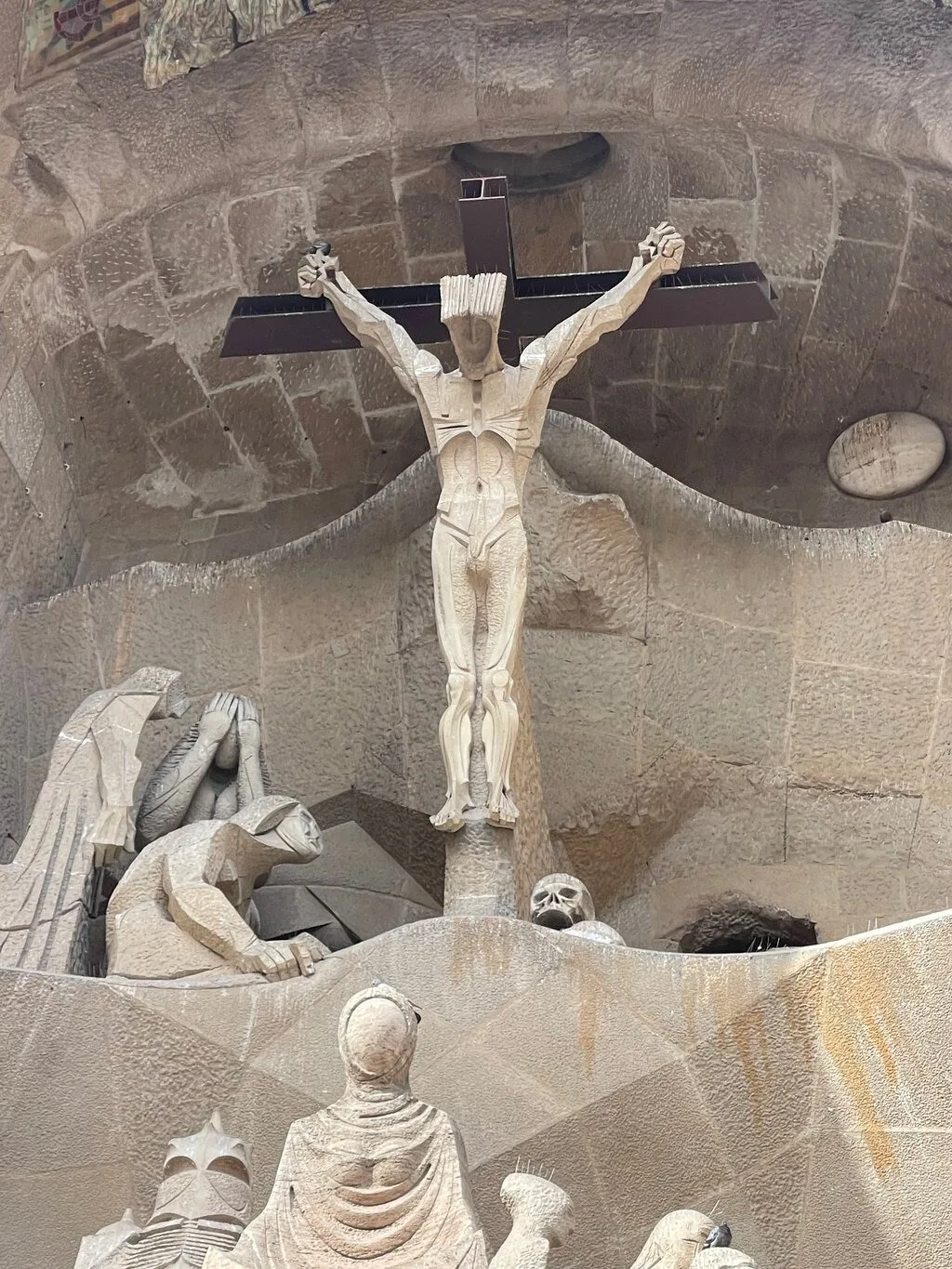
Bare, angular figures by Subirachs tell the last days of Jesus.
03 The Passion façade Bare, angular figures by Subirachs tell the last days of Jesus.
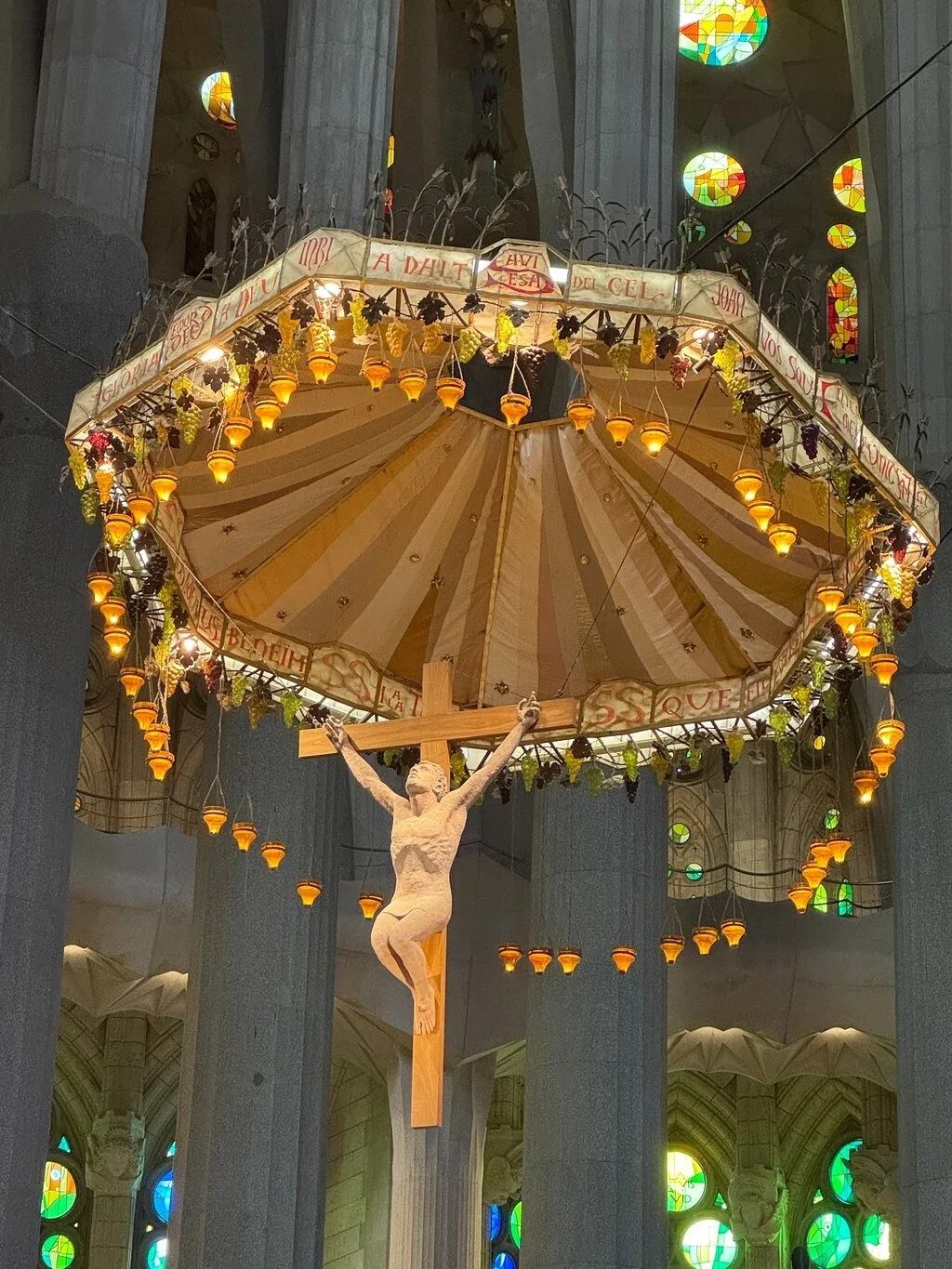
A crucified Christ under a canopy hung with lamps and grapes.
04 The altar canopy A crucified Christ under a canopy hung with lamps and grapes.

History

144 years in the making

From a first stone in 1882 to the cross on the tower of Jesus Christ in 2026, a century after Gaudí’s death.

From a first stone in 1882 to the cross on the tower of Jesus Christ in 2026, a century after Gaudí’s death.
The full history
  1. 1882

    The first stone

    On 19 March 1882, the bishop of Barcelona lays the cornerstone of a neo-Gothic church designed by Francisco de Paula del Villar, paid for by donations.

  2. 1883

    Gaudí takes over

    Antoni Gaudí, 31, replaces Villar and starts to rethink the whole project, from a crypt already under way to a church of light, nature and symbols.

  3. 1914

    Only the Sagrada Família

    Gaudí stops taking other work and devotes himself to the Temple, eventually living in his workshop on the site.

  4. 1926

    Gaudí dies

    Struck by a tram on 7 June, Gaudí dies on 10 June 1926, aged 73. Only one bell tower of the Nativity façade is finished. He is buried in the crypt, and Domènec Sugranyes takes over.

  5. 1936

    Fire in the workshop

    At the start of the Spanish Civil War the crypt and Gaudí’s workshop are set on fire. Drawings are lost and plaster models smashed; architects later piece the fragments back together.

  6. 1954

    The Passion façade begins

    Work starts on the west façade, from a drawing Gaudí made in 1917. Its bell towers are completed in 1976, and Josep Maria Subirachs carves its angular sculptures from 1987.

  7. 2005

    World Heritage

    UNESCO lists the Nativity façade and the crypt among the Works of Antoni Gaudí.

  8. 2010

    Consecrated as a basilica

    On 7 November 2010, Pope Benedict XVI consecrates the church and makes it a minor basilica. The nave, roofed at last, opens for worship.

  9. 2021–2023

    Mary and the Evangelists

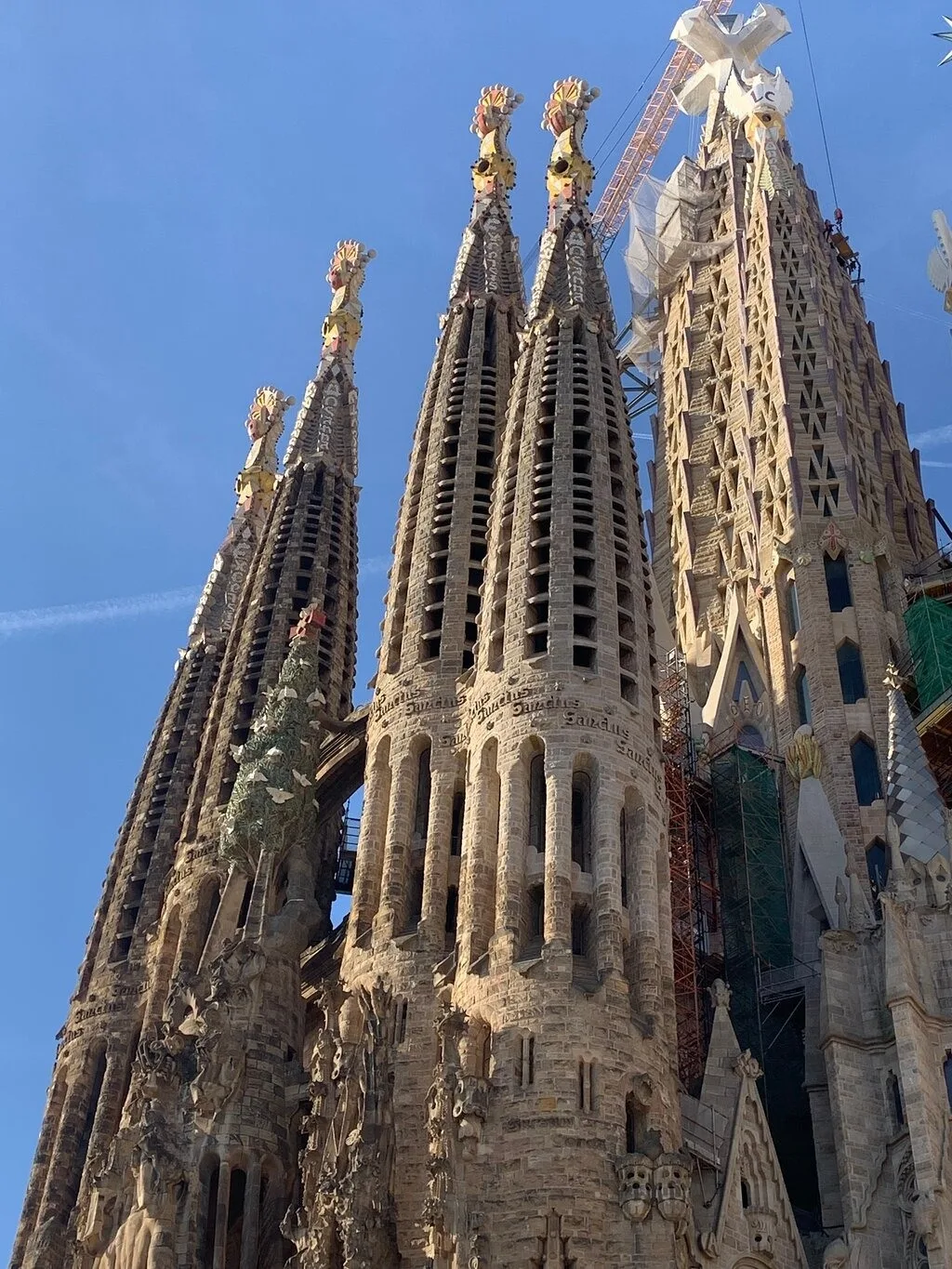
    The tower of the Virgin Mary (138 m), crowned by a lit star, opens in December 2021; the four towers of the Evangelists (135 m) follow in November 2023.

  10. 2026

    The tower of Jesus Christ

    The cross is placed on the central tower on 20 February 2026, a century after Gaudí’s death. At 172.5 m it makes the basilica the tallest church in the world. Pope Leo XIV blesses it on 10 June 2026.

On your own, or with a guide?

On your own

€26 official, with audio guide

Book a timed ticket on the official site, take the free audio guide app and stay as long as you like. The cheapest way in, and the app is good. official Sagrada Família website

The ticket guide

With a guide

€54 to €120

A live guide reads the façades with you, explains the symbols and handles the timing. Tour companies hold group slots, so they often have places when official tickets are sold out. We mark which tours include the entry ticket.

All tours compared

Tickets and guided visits, from the lowest price

Some links are affiliate links: if you book, we may earn a commission at no extra cost to you. How this works

Barcelona: Sagrada Familia Skip-the-Line Guided Tour and Tickets Entry ticket included

N° 1

Sagrada Família guided tour with entry ticket

A 90-minute visit with a guide certified by Barcelona’s tourism board, in groups of up to 15. Ticket and museum included; towers not.

  • 1.5 hrs
  • Small group
  • Free cancellation

Live guide: English

Fast Track: Sagrada Família Guided Tour Entry ticket included

N° 5

Sagrada Família guided tour with fast-track entry

Both façades, the interior and Gaudí’s life story, then free time for the museum. Towers not included, despite the web address.

  • 1.5 hrs
  • Free cancellation

Live guide: English
Sorted by price, lowest first. Prices and inclusions from the Viator or GetYourGuide listing; the price at checkout is the one that counts.

Stay one step ahead

Six mistakes that spoil a visit

Almost all of them happen before the door, and none is hard to avoid.

How to avoid each one
  1. 01 Turning up without a ticket
  2. 02 Arriving after your time slot
  3. 03 Wearing beachwear
  4. 04 Bringing a suitcase or a big rucksack
  5. 05 Booking a tower without checking the rules
  6. 06 Paying more for a “skip-the-line” ticket that skips nothing

The guide

Every page shows when it was last checked.

Questions visitors ask

All questions

How much is a ticket to the Sagrada Família?

The basic official ticket is €26 for an adult and includes the audio guide app. With a tower it is €36, with a guided tour €30, and with both €40. Under 30s pay €24 for the basic ticket, and children under 11 go free.

Can you buy Sagrada Família tickets at the door?

Not at a ticket desk. The official FAQ says tickets are sold online only; QR codes around the basilica let you buy on your phone, but only if places are left for that day, which is rare in high season. Book ahead.

How far in advance should I book the Sagrada Família?

Tickets go on sale about two months before the visit. From spring to autumn, and on weekends, book as soon as your dates are fixed; morning and late-afternoon slots go first. In winter a few days ahead is often enough.

How long does a Sagrada Família visit take?

The official estimate is about 1 hour for the basilica and museum, and about 1 hour 30 with a tower. The basic ticket has no time limit once inside, so many visitors stay 1.5 to 2 hours to watch the light change and see the museum below the nave.

What is the best time of day to visit the Sagrada Família?

For colour, go in the afternoon on a sunny day, when the low sun lights the warm red and orange windows on the west side and throws colour across the columns. For calm, take the first slot: since February 2026 the first hour, 9:00 to 10:00, is a quiet hour with earphones required.

Is there a dress code at the Sagrada Família?

Yes, it is a church. No swimwear, no see-through clothing and no bare feet; shorts and skirts must reach at least mid-thigh. Bare shoulders are not allowed in the Chapel of the Blessed Sacrament, and hats come off in the nave and museum.